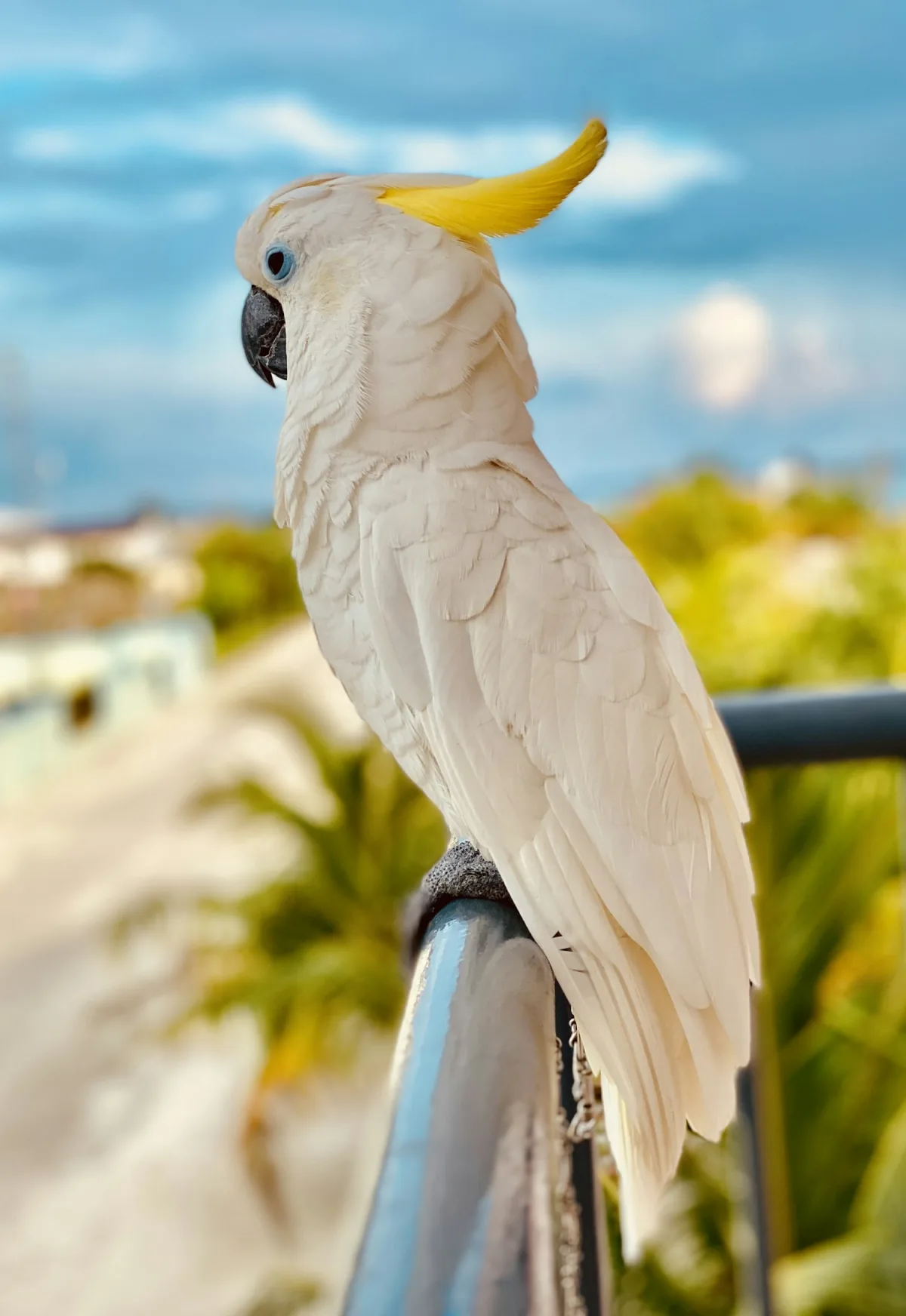
A family with striking differences
Cockatoos come from Australia and nearby islands and are recognised by their movable crests. Many are white or black, while the galah is pink and grey. Size and needs vary considerably within the family, with many species measuring around 30 to 65 cm.
Cockatoos can live for decades; some species reach sixty years or more. That is not an average for every bird. Start with the exact species and the individual’s history. The word “cockatoo” alone does not tell you how much space, food or experience is needed.
Social, curious and clearly audible
Cockatoos skilfully use their feet and beaks to climb, hold objects and explore toys. Shared play or a short training session can be enjoyable. Their crests make their reactions conspicuous, but a raised crest does not automatically invite touching.
These are social birds with powerful voices. Daily attention is important, as is learning to occupy themselves. Respect turning away or moving back to keep interactions comfortable. A cockatoo is not a cuddly toy that is always available; the amount of physical contact it enjoys varies between birds and occasions.
What does a cockatoo eat?
For many commonly kept cockatoos, complete pellets suitable for the species make a good staple. Offer varied vegetables and a smaller amount of fruit alongside them. Nuts and fatty seeds belong in limited portions or as rewards, rather than as an unlimited bowlful. Quantities depend on species, body condition and activity.
Look for “complete food”, the intended bird group and clear feeding instructions on the label. Use familiar bowls and check what the bird actually eats. A full-looking bowl may contain rejected leftovers. Provide clean water and replace fresh produce before it spoils. Change diets gradually while making sure the bird continues to eat enough.
Sturdy housing and feather dust
Allow room for flight, climbing and rest. Use secure catches and perches suited to the bird’s feet. Keep movement routes clear and position bowls where droppings cannot fall into them. Outdoor aviaries need shelter and appropriate indoor accommodation as well.
Cockatoos produce fine feather dust, which also settles on furniture and floors. Keep the area well ventilated and wipe dust away with a damp cloth rather than stirring it up. Consider any household sensitivity to dust before choosing a bird. A cleaning routine helps you manage this feature, but does not remove it.
Independent play and safe chewing
Offer suitable chewing material and a few different toys. Safe wood to work on or a simple container holding some food may attract more interest than a complicated puzzle. Start with an easy activity and discover what your bird enjoys.
Practise independent play while you are still nearby. You might read quietly while the bird uses a familiar toy. Build time apart gradually and alternate shared activity with rest. Not every encounter needs to become training or petting; spending calm time in the same room matters too.
The daily routine
At the start of the day, check both bird and enclosure. Cockatoos can chew forcefully, so inspect fittings and catches even when the toy itself still looks sound.
- Each morning: provide water and food, wash used bowls and clean the enclosure floor.
- During the day: offer movement, company and chewing materials; remove fresh-food leftovers.
- Later: wipe away dust and dirt, check for loose parts and prepare for undisturbed sleep.
Share familiar care tasks between trusted people where possible. Persistent fear, biting or sudden behavioural changes call for appropriate support; discuss physical symptoms with an avian vet.
Is this species right for you?
A cockatoo may suit a patient person who enjoys an expressive bird and makes room for both attention and independent activity. Its curiosity and dexterity can make daily life rewarding, without every cockatoo having the same personality.
The deciding factors are often whether noise and feather dust fit your home and whether you can sustain care over many years. Wanting mainly cuddles or a quiet pet is less compatible with this group. Discuss an ordinary working day during a visit and arrange someone who can take over daily care.