Look at the whole moment
A crest, pupil or movement does not tell the entire story on its own. Notice what happened just before, how the bird is positioned and whether it approaches or seeks distance. Compare this with its usual behaviour. The same movement may mean something different in another situation.
Observe the bird first when you are not asking it to do anything. Where does it rest, how does it hold its feathers, and what sounds accompany quiet activity? That ordinary behaviour is your starting point. Without this personal comparison, a movement is easy to misread, especially if you only know the bird from short videos or a first visit.
Separate observation from interpretation. “It turns its head away when my hand approaches” describes an event. “It does not like me” assigns an intention you cannot see. The first description suggests changing distance or pace. The second may encourage you to try harder just when the bird needs space.
Distance is an answer too
When a bird steps away, turns aside or does not approach an offered hand, respect that without turning it into a contest. Pause, increase distance and make the next step easier. A bird that has a choice does not need to communicate discomfort as forcefully.
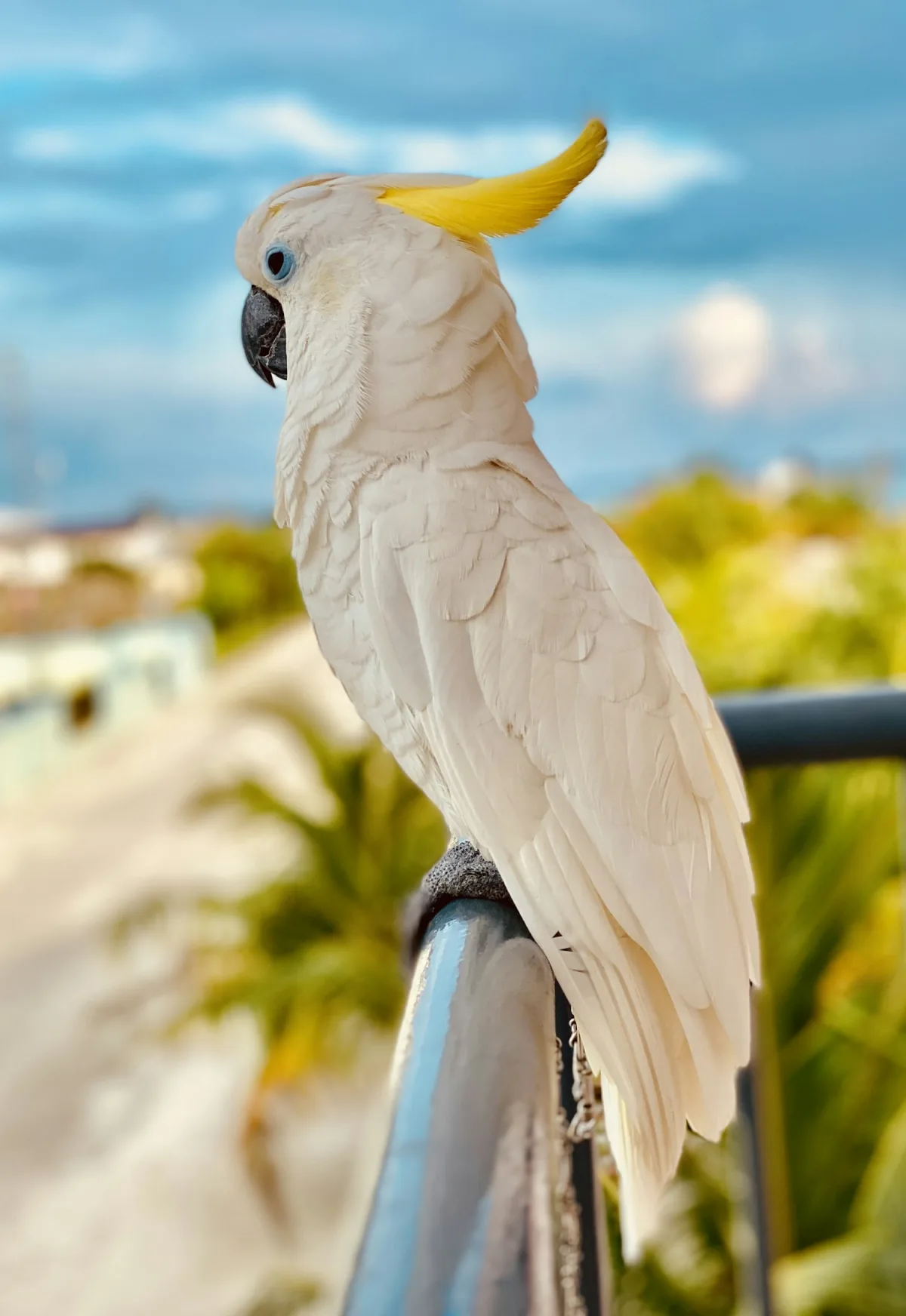
A signal makes sense in its setting. A bird may briefly shake its feathers after preening, whereas remaining fluffed up with reduced activity can mean something very different. A raised crest or changing pupils do not independently answer whether touch is welcome. Consider several signals together and what happened immediately beforehand.
Notice direction too. Is the bird moving towards you, staying in place or trying to increase distance? Check whether moving away is actually possible. On a narrow perch beside a wall, remaining still may be the only available option. Comfort is easier to assess when the bird has choices and voluntarily stays nearby.
Describe what you see
Write “steps backwards when the hand approaches” rather than “is jealous”. Concrete descriptions help you adjust the setting and your own approach. Brief notes about place, time and what preceded the behaviour can help a professional assess patterns.
Respond to small changes instead of waiting for a pronounced lunge. Taking a step back may be enough to interrupt tension. You do not have to try again immediately. Let the bird return to a familiar activity and consider what could make the next encounter easier, such as a different location or fewer visitors.
This does not make every retreat a serious behaviour problem. Daily circumstances change: an unfamiliar coat, a box in the hallway or someone suddenly standing up can attract attention. Calm observation and a simpler setup provide useful information. Repeated biting, marked fear or unexpected behavioural change warrant qualified help that also considers possible physical causes.
Notice changes
A bird that suddenly responds differently may be uncomfortable or ill. Do not automatically attribute biting or withdrawal to personality. Have sudden or persistent changes assessed, especially when appetite, activity or posture change too.
An observation diary does not need to be lengthy. Note the time, situation, visible response and your own action. “Moved back during a bowl change, resumed eating when I stepped away” is already useful. After a few days, you may notice that difficulties occur during fast approaches from above or where no second perch is available.
Share these patterns with everyone providing care. A child can practise describing movements without touching the bird. Observation then becomes a shared skill. The aim is not to assign a fixed label to every posture, but to recognise more reliably when your approach is comfortable and when the bird needs a different arrangement.
A place to start
- Observe first, approach second.
- Allow room to choose distance.
- Describe behaviour without human labels.
A common question
Does a raised crest always mean happiness?
No. Consider the situation and the rest of the body. Focus on learning the signals of your individual bird.