Meet the rainbow lorikeet
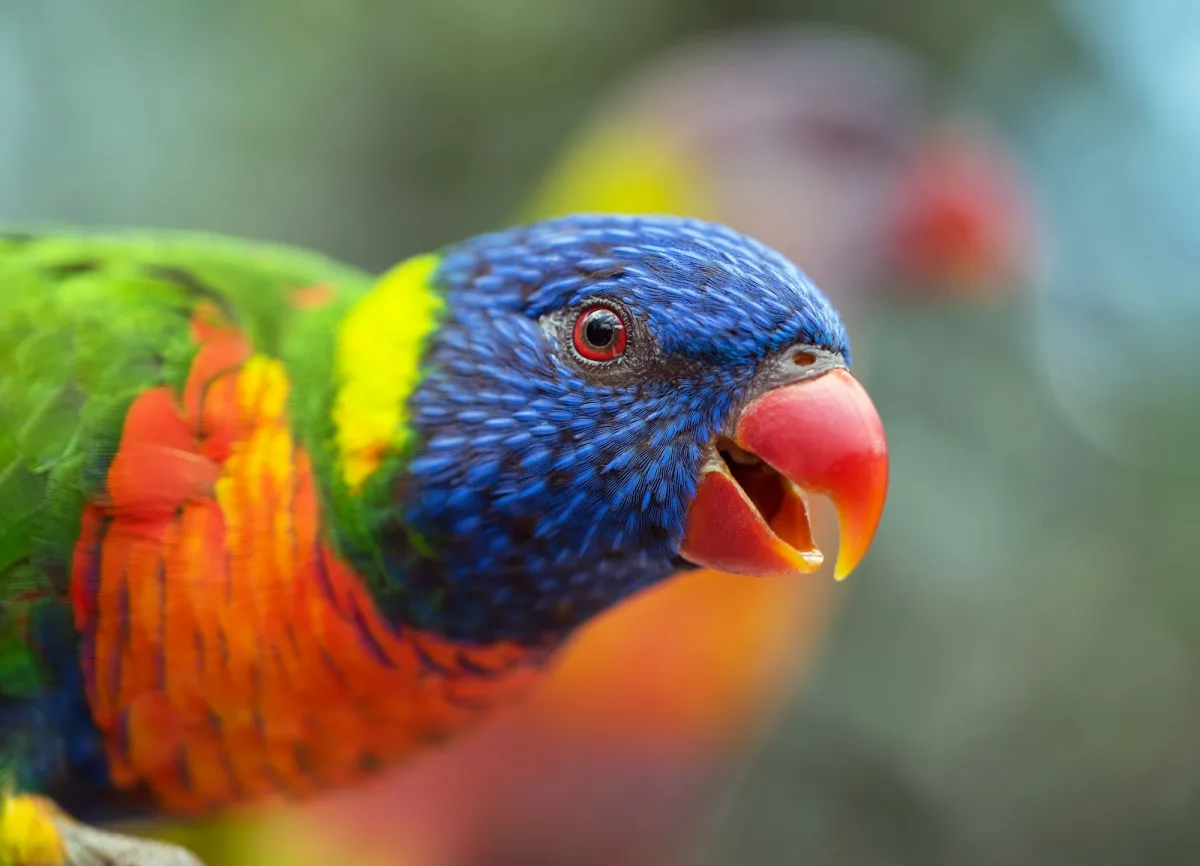
The rainbow lorikeet (Trichoglossus moluccanus) comes from Australia. Its blue head, green back and orange-yellow chest are instantly recognisable. It measures around 26 cm, including the tail. The World Parrot Trust gives a captive lifespan of 15 to 25 years. This is a guide, not a prediction for every bird.
A brush-like tongue tip helps it collect nectar and pollen from flowers. This feeding adaptation explains why caring for a lorikeet differs from caring for an African grey. There is much more to this parrot than its colourful appearance.
Personality, company and noise
A lorikeet may investigate a new toy enthusiastically, explore a bowl or hang upside down from a branch. That lively curiosity is part of the pleasure of watching one. Whether a particular bird enjoys stepping onto your hand depends on its experience and the trust you build together.
Wild lorikeets often live in flocks. At home, they also need daily company. Their sharp calls and busy chatter are clearly audible, so they are not quiet companions. Being social does not mean accepting every other bird. Introductions need care, with attention to feeding areas and how the birds get along.
What does a lorikeet eat?
The foundation is food specifically formulated for lories and lorikeets, such as a nectar or pollen substitute. Check whether the label describes a complete diet or a complementary food that must be combined with other products. Ordinary seed mixes, fruit alone and homemade sugar water do not provide a balanced diet.
Offer suitable fresh produce for variety, such as small pieces of washed apple or pear without seeds, in a separate bowl. Some lorikeet foods are fed dry; others are mixed with water. Follow the instructions for that product, as there is no universal mixing ratio. Prepare small fresh portions and do not top up old leftovers. Clean drinking water must remain available even when the food is liquid.
Housing for an active bird
Choose spacious housing with useful horizontal space and safe opportunities to fly each day. Position perches so there is a clear route between them. A tall cage crowded with toys offers less usable room than a thoughtfully arranged enclosure. Keep food bowls away from places where droppings fall from perches.
A moisture-rich diet means wet droppings, and feeding can involve splashes. Choose a washable floor and a location where surrounding walls and surfaces are easy to clean. An outdoor aviary also needs shelter, suitable indoor accommodation and an entrance that helps prevent escapes.
Play, bathing and learning
Offer a stable, shallow bath and let the bird decide whether to use it. Provide climbing opportunities and simple food-search games too. A visible piece of food in an easy-to-clean container is enough to start. Washable materials work better for wet food than absorbent puzzles that trap leftovers.
Short sessions can help a lorikeet learn to step up or enter a carrier calmly. Reward a small success promptly and finish before interest fades. Leave time for independent activity and undisturbed rest. You do not need to keep introducing new objects throughout the day.
The daily routine
Start the morning by checking that your bird is alert and eating normally. Prepare food according to its instructions and provide clean water. Check again later: a tipped bowl, dirty bathwater or wet food may need attention before the next planned round.
- At feeding times: remove leftovers, wash bowls and provide fresh food as directed by the product instructions.
- Every day: remove wet floor lining, wipe up splashes and check toys and catches.
- Before night: check water and the enclosure and provide a quiet sleeping place.
Contact an avian vet if your bird eats noticeably less, becomes lethargic or changes suddenly in another way. With clear instructions, ordinary food preparation and daily cleaning are tasks you can manage yourself.
Is this species right for you?
A lorikeet may suit someone who enjoys an inquisitive, energetic bird and is happy to make specialist feeding and cleaning part of everyday life. Exploring, climbing, bathing and responding to the surroundings can be fascinating to watch. Tameness or affection cannot be promised in advance.
If noise or the practical care worries you, ask to see those parts of the day during a visit. Can you keep the food fresh on working days, and is someone able to cover your absences? Those questions are more useful than choosing on colour or an entertaining first encounter alone.